Emergency Plumbing Guide: What to Do Before Help Arrives
Caught in a Plumbing Emergency? You’re Not Alone
It happens fast. Water on the floor. A strange smell. Maybe a burst pipe or a toilet overflowing—right when you least expect it. If panic hits, remember: you’re not alone, and you have steps you can take right now.
At RWB Plumbing, we’ve seen every emergency you can imagine. Our job is to help you regain control, limit damage, and get your home back to normal. Here’s what you can do before an emergency plumbing technician arrives.
The Problem: When Plumbing Goes Sideways 🚨
Plumbing emergencies don’t wait for a convenient time. They happen at midnight, during storms, or on holidays. One minute you’re hosting family dinner, the next you’re ankle-deep in water.
Common residential emergencies include:
- Burst pipes (especially after a freeze)
- Water heater leaks or failures
- Overflowing toilets and clogged drains
- Gas smells or suspected leaks
- Sewage backups
- Sudden loss of water pressure
These issues can cause property damage, health risks, and even electrical hazards. Acting quickly can make all the difference.
Quick Safety Checklist: First Steps to Take
When something goes wrong with your plumbing, seconds count. Here’s what to do:
-
Shut off the water.
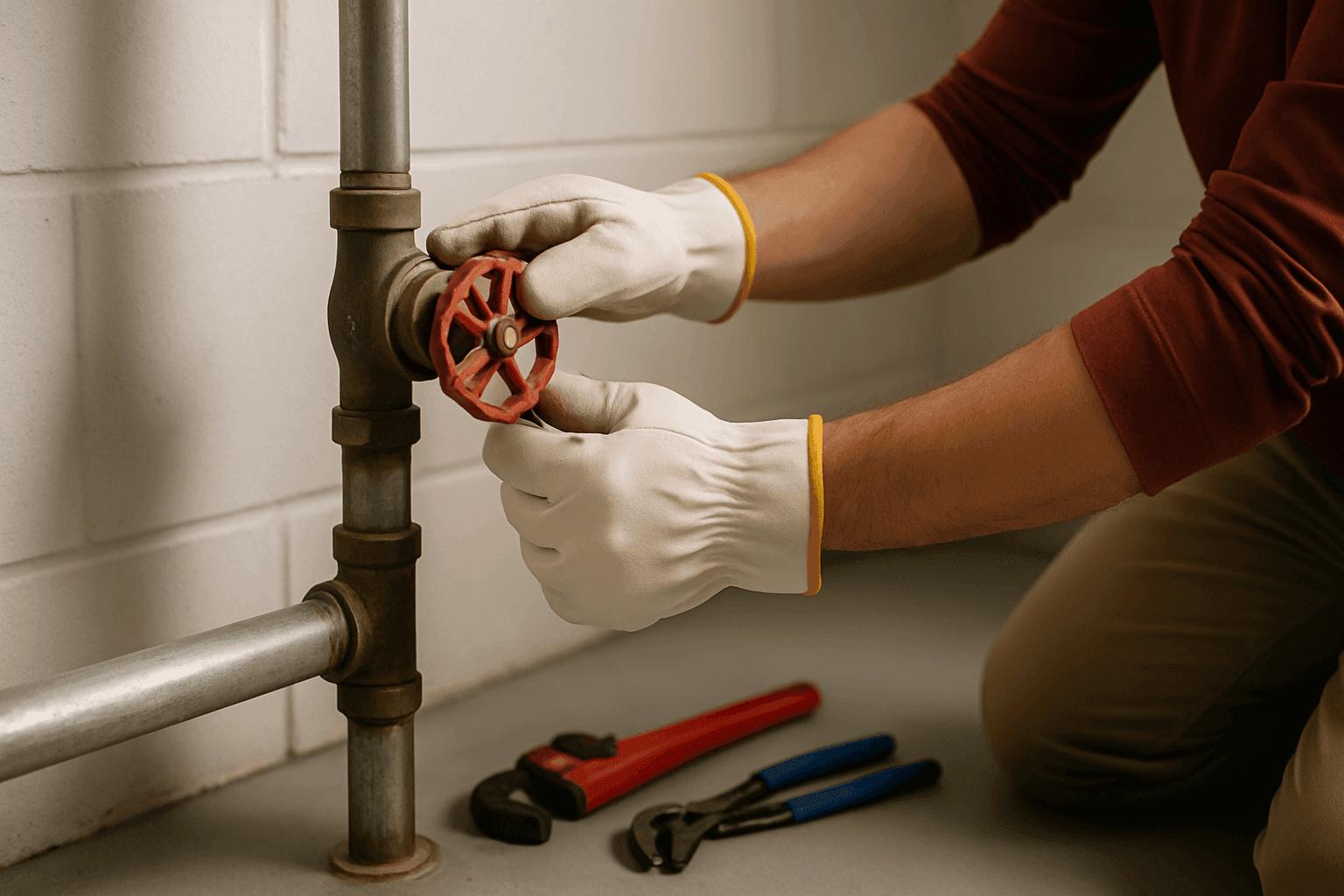
Find the main shutoff valve—often in the basement, crawl space, or near the street. Turn it clockwise to stop the flow. For sinks, toilets, or appliances, use the local shutoff valve behind or beneath the fixture. -
Turn off power if water is near outlets or appliances.
If water is close to any electrical source, switch off the power at your circuit breaker. Stay clear of standing water and electricity. -
Contain the leak.
Use towels, buckets, or pans to catch drips. Move valuables and electronics out of harm’s way. -
Ventilate if you smell gas.
Open windows and doors. Don’t use switches or create sparks. Evacuate and call your gas company from outside. -
Avoid using fixtures.
Don’t flush toilets, run water, or use appliances until the problem is identified. -
Document the damage.
Take photos for your insurance company.
DIY or Call a Pro? Knowing Your Limits
Some problems you can tackle. Others demand urgent professional help.
When You Can DIY
- Unclogging a minor toilet blockage with a plunger
- Tightening a loose faucet or pipe fitting
- Turning off water to a leaking appliance
When to Call Emergency Plumbing Services
- Burst pipes or flooding you can’t stop
- Water heater leaks (risk of burns or electrical hazard)
- Gas smells or suspected leaks (leave the house first)
- Sewage backups—serious health risk
- Complete loss of water or water pressure
- No hot water in winter (risk of frozen pipes)
Don’t put yourself at risk. If you’re unsure, it’s safer to call a professional.
What the Pros Do When They Arrive
A licensed plumber from RWB Plumbing will:
- Assess the scene — Identify the source and type of emergency.
- Stop further damage — Isolate or repair the immediate problem.
- Use specialized tools — Leak detection equipment, drain cameras, or pressure gauges.
- Make safe repairs — Following local building and plumbing codes (see the International Plumbing Code and your state’s safety rules).
- Explain your options — Temporary fixes vs. long-term solutions.
We’re trained and equipped for Water Heater Repair near you, gas safety checks, sewer line inspection, and much more.
Prevention & Maintenance: Stay Ahead of the Next Emergency
Most plumbing disasters are preventable. Here’s how to lower your risk:
- Regularly inspect exposed pipes for corrosion, leaks, or rust.
- Know your main shutoff location and teach your family.
- Insulate pipes before winter to avoid freezing.
- Schedule annual water heater and boiler checks.
- Install backflow prevention devices for flood-prone areas.
- Test sump pumps twice a year, especially before rainy seasons.
- Have your sewer line inspected if you have mature trees nearby.
Good habits now mean fewer surprises later.
Costs & Time Factors: What to Expect
Plumbing emergencies range from a quick fix to major repairs. Factors that affect cost and response time:
- Severity of the issue (burst pipe vs. slow leak)
- Time of day (after-hours, weekends, and holidays may take longer)
- Parts availability (some repairs need special order parts)
- Access to the problem area (behind walls or under floors)
Typical emergency calls can take from one hour (simple leaks) to several hours (major repairs or repiping). Your plumber will explain the likely timeline and next steps after assessment.
When It’s a True Emergency
Some signs mean you need urgent help—no waiting.
- Flooding or standing water anywhere in your home
- Sewage odors or visible backups
- Sudden drop in water pressure (could be a burst main)
- Gas smell (leave immediately and call your gas utility)
- No hot water in freezing temperatures
If in doubt, err on the side of caution. Your safety comes first.
FAQ: Your Emergency Plumbing Questions
Q: What’s the fastest way to find my main water shutoff?
A: Look where your water line enters the house—often in basements, garages, or utility closets. It’s a round or lever-style handle.
Q: Can I use duct tape for a pipe leak?
A: As a temporary measure, yes—but only to slow the leak until help arrives. Don’t rely on it for long.
Q: Is it safe to use my plumbing if I had a backflow event?
A: No. Wait for an inspection and backflow testing to ensure your water is safe.
Q: What makes a plumber “emergency ready”?
A: Proper licensing, round-the-clock service, and up-to-date equipment. Always ask for credentials and proof of insurance.
Local/Seasonal Considerations: Storms, Freezes, and Holidays ❄️
Emergencies spike during certain times:
- Winter: Frozen pipes are a top culprit. Run a trickle of water during deep freezes and open cabinet doors to let warmth reach pipes.
- Storms: Heavy rain can overwhelm drains and sump pumps. Clear gutters and test your sump pump before the rainy season.
- Holidays: More guests mean more water use. Remind family where the shutoffs are and avoid flushing anything but toilet paper.
Check your home insurance policy for coverage specifics on weather-related plumbing emergencies.
Choosing a Plumber You Can Rely On
Not all emergency plumbers are created equal. Look for:
- Proper licensing and insurance
- 24/7 emergency plumbing availability
- Clear communication and transparency
- Good reviews from real customers
- Up-front assessment and clear next steps
If you’re in doubt, ask for their license number and check with your local authority or the state board of plumbing examiners.
Call for Immediate Help
Plumbing emergencies don’t wait. Neither should you.
Call RWB Plumbing now — or reach us anytime at 877-409-5028 .