How to Detect Hidden Water Leaks in Your Home
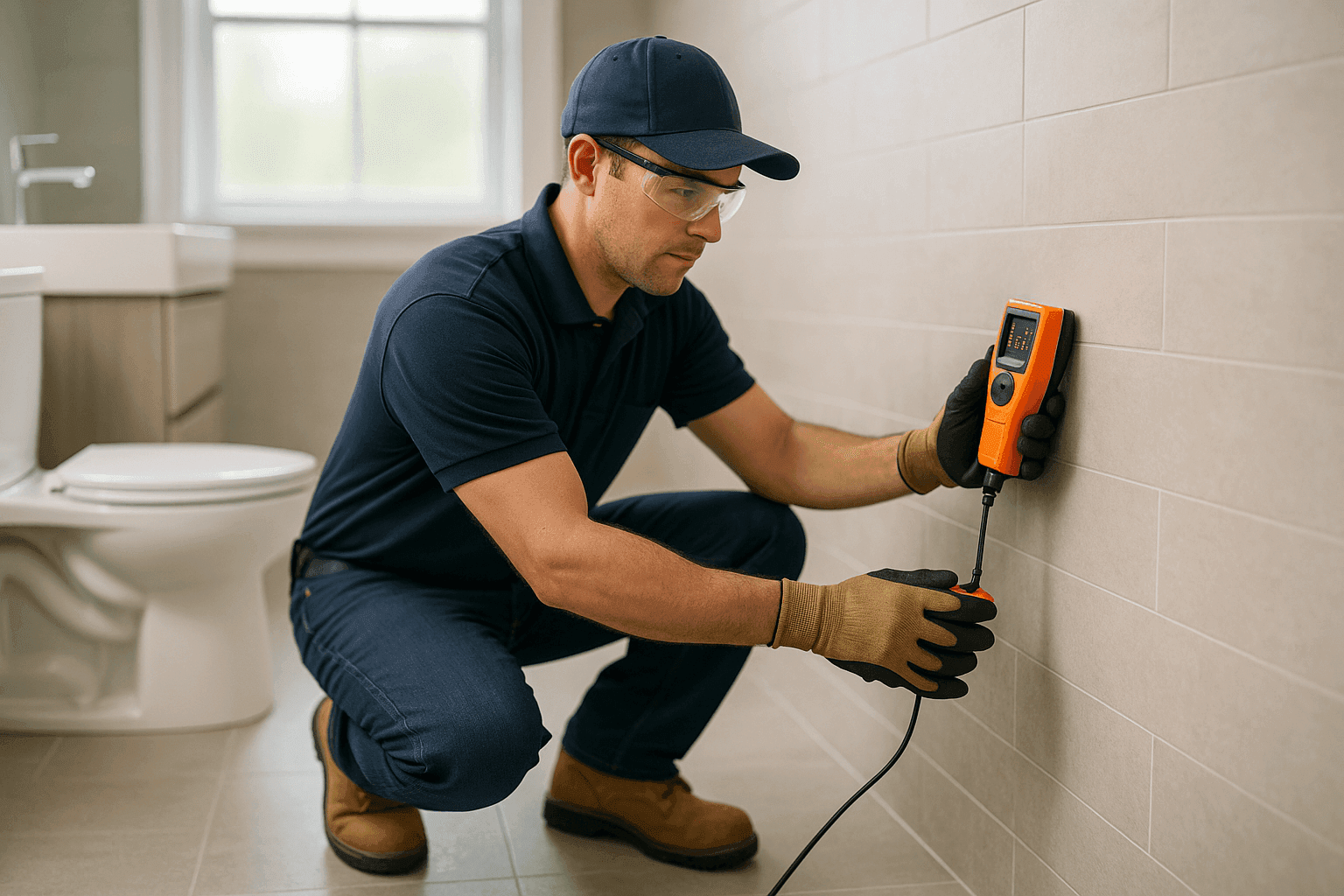
Have you ever noticed a mysterious stain on your ceiling or a musty smell that just won’t quit? You’re not alone. Hidden water leaks can sneak into any home, causing chaos before you even spot them. What starts as a trickle behind the wall can become a disaster—damaging floors, inviting mold, and draining your wallet.
At RWB Plumbing, we know how quickly a small leak can turn into an emergency plumbing call. Our licensed, insured team is ready 24/7 with advanced tools and a nationwide network. But the sooner you find a leak, the better your chances of avoiding costly repairs. Here’s how to catch those leaks before they catch you off guard.
Signs of Hidden Leaks in Walls, Floors, and Ceilings 🕵️
Leaks don’t always announce themselves with a puddle. Sometimes, they whisper—leaving clues if you know where to look. Imagine your house as a living body. Just like a fever signals infection, these signs flag trouble:
- Peeling or bubbling paint: Especially on walls or ceilings, this can mean water is trapped inside.
- Stains or dark patches: Brown, yellow, or even grayish spots that grow.
- Musty odors: If rooms smell damp, mold may be growing where you can’t see.
- Warped floors or spongy spots: Wood and laminate floors buckle or feel soft underfoot.
- Sudden drop in water pressure: A hidden leak could be stealing your flow.
- Unexplained increase in your water bill: When costs climb but your habits haven’t changed, water’s escaping somewhere.
- Mold or mildew: Even if you scrub, it returns—especially on walls or ceilings.
Tip: Trust your senses. If something looks, smells, or feels off, it’s worth a closer look.
Quick Safety Checklist
Before you jump into detective mode, keep safety first—water and electricity don’t mix.
- Turn off power to affected areas if you notice wet outlets or wires.
- Wear rubber-soled shoes and gloves when inspecting water-prone spots.
- Keep children and pets away from suspected leak zones.
- Don’t touch standing water if outlets or appliances are nearby.
- Know where your main water shutoff valve is—just in case.
DIY Leak Detection Steps
There’s no need to grab a sledgehammer. Often, a little detective work can uncover a lot.
Step 1: Listen
- Turn off noisy appliances.
- Stand quietly in suspect rooms—listen for hissing, dripping, or trickling sounds in walls or under floors.
Step 2: Visual Inspection
- Check beneath sinks, along baseboards, behind toilets, and inside cabinets.
- Open access panels for tubs or showers, if you have them.
Step 3: The Toilet Dye Test
- Add a few drops of food coloring to your toilet tank.
- Wait 20 minutes—don’t flush.
- If color appears in the bowl, you’ve found a silent leak.
Step 4: Meter Check (see next section)
Step 5: Surface Moisture
- Use a dry tissue or paper towel to swipe along pipes and joints. If it comes back damp, you may have found the culprit.
DIY Inspection Log
Print this checklist and mark your findings:
- [ ] Checked walls/ceilings for stains or peeling paint
- [ ] Inspected under sinks and around toilets
- [ ] Listened for hissing or dripping
- [ ] Tested toilets for silent leaks
- [ ] Noted any musty smells or warping floors
- [ ] Checked meter for unexplained flow
Using Water Meters to Spot Leaks
Your water meter is like a speedometer for your plumbing. It tells you if water is moving when it shouldn’t.
How to Use Your Water Meter:
- Turn off all water-using appliances (no laundry, no dishwasher, no taps running).
- Locate your water meter—usually outside, near the curb or in a basement.
- Record the current reading (write it down or take a photo).
- Wait 1–2 hours—don’t use any water in the home.
- Check the meter again. If the number has changed, water is escaping somewhere.
If you spot movement but can’t find a cause, call a professional. Leaks inside walls or underground are often invisible without pro tools.
Smart Leak Sensors: Modern Early Warning Systems 📱
Technology makes leak hunting easier. Smart leak sensors are small devices you can place under sinks, behind toilets, or near hot water heaters. If they detect moisture, they send an alert to your phone.
Advantages of Smart Sensors:
- 24/7 monitoring—catch leaks while you’re asleep or away.
- Many models integrate with home alarm systems.
- Some detect rapid temperature drops, warning of frozen pipes.
Remember: Even high-tech sensors need regular battery checks and testing. Place them in areas where leaks are most likely to start—laundry, bathrooms, kitchens, and near your water heater.
When to Call a Pro
Some leaks are like icebergs—most of the damage is hidden out of sight. Here’s when it’s time to call RWB Plumbing:
- You’ve found water stains or mold, but can’t find the source.
- Your meter shows water loss, but you can’t locate the leak.
- There’s a sudden drop in water pressure throughout the house.
- You hear water running in pipes with all taps off.
- You suspect a slab leak (damp floors, warm spots, cracks in flooring).
- You notice a gas smell near your water heater or boiler—this is a safety emergency.
Our teams use advanced detection tools—infrared cameras, acoustic sensors, and thermal imaging—to pinpoint leaks without tearing up your home. As a licensed and insured provider, RWB Plumbing follows local and national safety codes (like the International Plumbing Code and NFPA guidelines for gas safety).
What Pros Do On Arrival
When our RWB Plumbing team arrives, here’s how we tackle the mystery:
- Interview: We ask you about what you’ve noticed—sounds, smells, recent repairs.
- Visual check: We inspect all visible plumbing and suspect areas.
- Advanced tools: We use moisture meters, acoustic listening devices, and thermal cameras to “see” behind walls and floors.
- Pressure testing: Sometimes, we isolate sections of pipe to test for pressure loss.
- Documentation: We log all findings and clearly explain what’s next—repair, replace, or further investigation.
No guesswork. No unnecessary demolition. Just targeted detection with minimal disruption.
Prevention and Maintenance Tips 🛠️
Catching leaks early is half the battle. Stopping them before they start is even better.
- Schedule regular plumbing inspections—especially for older homes.
- Check under sinks and behind appliances monthly.
- Know the age and condition of your water heater, pipes, and fixtures.
- Insulate pipes before winter to prevent freeze-thaw bursts.
- Replace worn-out washers, gaskets, and supply lines.
- Never ignore slow drains or persistent clogs—they can signal a leak or blockage.
- Test your sump pump annually, especially before rainy seasons.
- Install backflow prevention devices if you live in flood-prone areas.
The Environmental Protection Agency (EPA) estimates that household leaks waste nearly 1 trillion gallons of water nationwide every year. A little vigilance can save a lot.
Costs & Time Factors
Leak detection and repair costs vary as widely as the leaks themselves. Here’s what affects the price and timing:
- Type of leak: Simple leaks (like under-sink pipes) are fast to find and fix. Hidden leaks (inside walls, under slabs, or behind tile) require specialized tools and more time.
- Access: If pipes are buried or behind finished walls, careful removal and repair takes longer.
- Severity: Minor drips can often be patched quickly. Major leaks, or those with extensive water damage, may require multiple visits and coordination with other trades (like flooring or drywall pros).
- Parts and materials: Replacement pipes, fittings, or fixtures can affect the final cost.
Most residential leak detection jobs can be diagnosed within a few hours. The actual repair time depends on what we find. We’ll always explain your options before starting any work.
When It’s an Emergency
Some leaks can’t wait. If you notice any of the following, act immediately:
- Water gushing or streaming from walls, ceilings, or floors
- Visible sparks or electrical shorts in wet areas
- Strong gas smell near appliances or water heater
- Sewage backing up into sinks, tubs, or toilets
- Rapidly spreading mold or flooding
Shut off your main water supply and call RWB Plumbing. Our emergency plumbing crews are ready day or night to help keep your home safe.
FAQ: Common Leak Questions
Q: Can a small leak wait a few days?
A: Even a drip can cause big trouble. Water can spread fast, rot wood, ruin drywall, and trigger mold. Address leaks as soon as you find them.
Q: What if my leak is behind a wall?
A: Don’t guess. Hidden leaks need professional tools to locate and repair without unnecessary damage.
Q: Will homeowner’s insurance cover water damage?
A: Many policies cover “sudden and accidental” leaks, but not damage from neglect or ongoing drips. Check your policy or ask your agent.
Q: Do smart leak detectors really help?
A: Yes! They’re like smoke detectors for water—catching problems early, even when you’re away.
Local and Seasonal Considerations 🌧️
Seasons and location matter. In cold climates, pipes are more likely to freeze and burst—insulate before winter. In humid or rainy areas, check basements and crawl spaces after storms. If you live in older neighborhoods, aging pipes may be more prone to leaks. Ask about local plumbing codes or recommended inspections in your region.
Printable Home Leak Inspection Log
Keep this checklist handy, or print it for your records:
- Date: _____________
- Checked walls/ceilings for stains: [ ]
- Inspected under sinks and appliances: [ ]
- Listened for unusual sounds: [ ]
- Toilet dye test performed: [ ]
- Checked meter for unexplained use: [ ]
- Noted musty odors or mold: [ ]
- Main shutoff valve location confirmed: [ ]
- Smart sensors tested: [ ]
- Called RWB Plumbing for professional inspection: [ ]
Water leaks don’t have to take you by surprise. Whether you’re dealing with a sneaky drip or a full-blown emergency, RWB Plumbing is here to help—day or night, coast to coast. Our licensed, insured teams use the latest technology to find and fix leaks fast, protecting your home and your peace of mind.
Call RWB Plumbing now — or reach us anytime at 877-409-5028 .