Leak Repair: Fast Solutions for Common Household Leaks
Water moves fast, and even a tiny leak can quickly become a big problem. One drip, one puddle, and suddenly your plans are on hold. At RWB Plumbing, we’ve seen every kind of household leak—and know just how stressful it can be.
You want solutions, not extra headaches. Whether water is dripping under your sink at midnight or you notice a growing stain on the ceiling Sunday morning, we’re here to help. This guide breaks down what you can do right now, when to call for emergency plumbing, and how RWB Plumbing gets your home dry and safe again.
The Most Common Household Leak Sources
Leaks have favorite hiding spots. The usual suspects? Faucets, toilets, and the pipes under your sinks. Each one can make a mess—sometimes fast, sometimes slow and sneaky.
Leaky Faucets
The constant drip, drip, drip. Not only does it waste water, but it can also drive you up the wall. Most faucet leaks happen because of worn washers or loose fittings.
Visual:

Running Toilets
Hear the tank refilling when no one's using the bathroom? That's usually a sign of a leak inside the toilet. Worn flapper valves or fill valves are the main culprits.
Visual:

Pipes Under Sinks
A drip under the sink can quickly turn into a cabinet full of soggy cleaning supplies. Loose compression nuts or cracked pipes are often to blame.
Visual:

Quick Safety Checklist ✅
Before you grab your wrench, take a moment to protect your home and yourself:
- Shut off the water supply at the closest valve.
- Unplug nearby appliances to avoid electrical shock.
- Clear the area of anything you don’t want soaked.
- Use towels or buckets to catch drips and prevent floor damage.
- Wear gloves if you’re dealing with dirty or unknown water.
- Check for moldy smells or discoloration—signs water has been leaking longer than you thought.
If you spot any sparks, bulging ceilings, or the floor feels spongy underfoot, stop and call for emergency plumbing right away.
DIY or Call a Pro? 🛠️
Not every leak needs a plumber on speed dial. Here’s how to tell:
DIY Leaks
- Faucet drips: Try tightening handles or replacing a washer.
- Toilet running: Adjust or swap the flapper inside the tank.
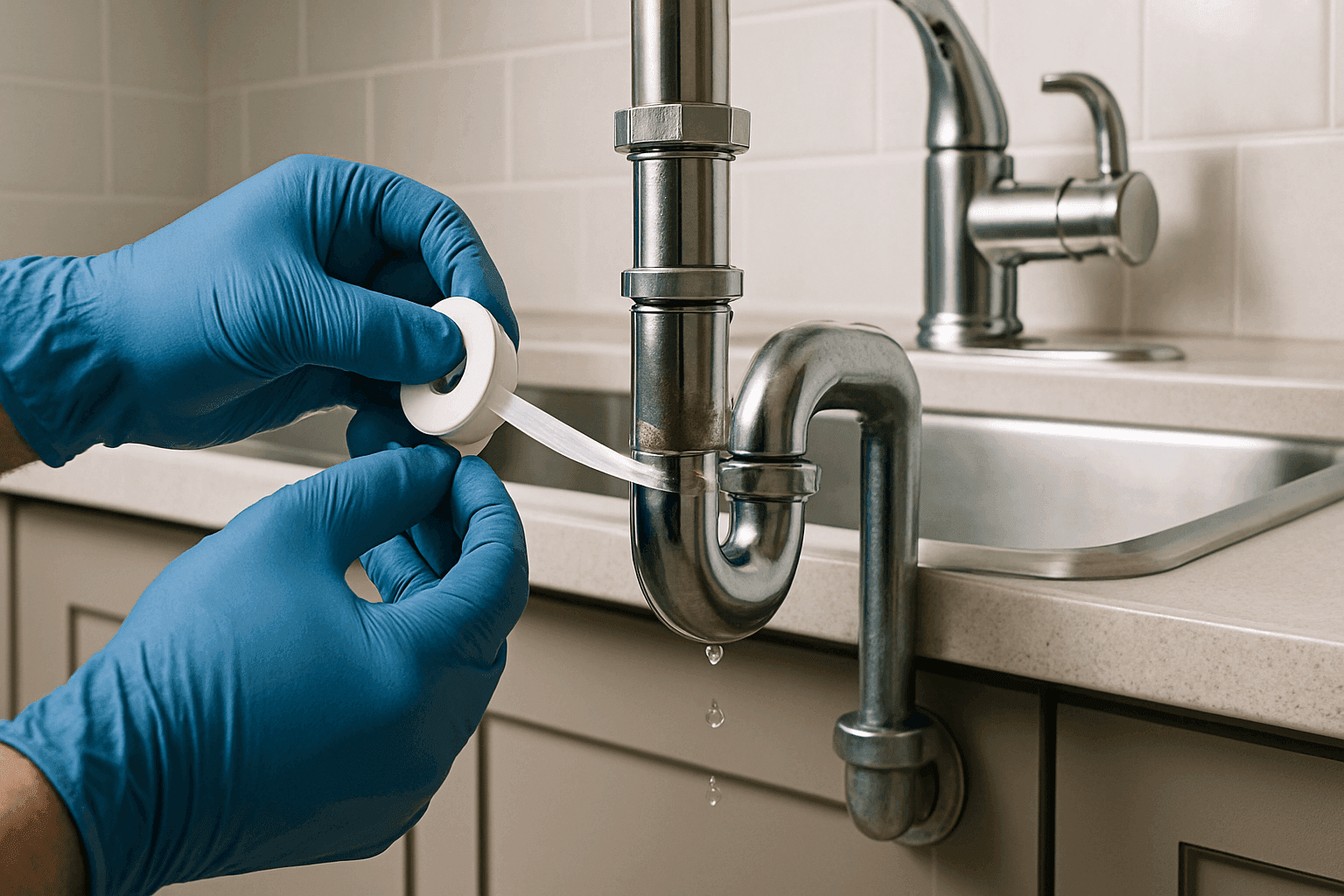
- Minor under-sink leaks: Tighten compression nuts or wrap plumber’s tape around threaded joints.
Temporary fixes:
- Plumber’s tape for threaded pipe leaks.
- Bucket and towels for drips until you can repair or get help.
- Shut off water to limit the mess.
When to Call RWB Plumbing
- Water pooling under floors or running down walls.
- Pipes leaking behind drywall or ceiling.
- Recurring leaks that keep coming back.
- Gas smell or water near electrical outlets (major safety hazard).
- No shutoff valve, or you can’t find it.
- Water heater leaking—especially if you need Water Heater Repair near you.
Fast help from RWB Plumbing means the problem stops growing. If in doubt, don’t risk it.
What RWB Plumbers Do On Arrival
When you call, our team gets there fast—tools in hand, ready for anything. Here’s what you can expect:
- Assess and isolate the leak. We use professional leak detection tools and a sharp eye.
- Stop the water at the source—no more spreading damage.
- Repair or replace the faulty part (pipes, valves, washers, or entire fixtures).
- Check for hidden damage. Water likes to sneak into walls and floors.
- Test the fix. We run the water, double-check everything, and make sure it’s truly solved.
- Explain what happened. You’ll know why it leaked and how to avoid it next time.
RWB Plumbing stands by every repair we do—clear, honest, and built to last.
Fast Temporary Fixes for Common Leaks ⏱️
Some leaks can’t wait for a scheduled appointment. Here’s what you can do in a pinch:
Plumber’s Tape
A roll of white or blue plumber’s tape can buy you time. Wrap it around threaded joints on pipes under sinks to slow or stop a drip.
Tightening Fittings
Sometimes, all that’s needed is a quick twist. Use an adjustable wrench to gently—but firmly—tighten nuts on sink pipes or faucet connections.
Shut Off the Water
Find the local shutoff valve (under the sink, behind the toilet, near the water heater) and turn it clockwise until it stops. This cuts off the water supply to that fixture.
Permanent Leak Repair Solutions
Temporary fixes only hold for so long. For a lasting solution:
- Replace worn washers in faucets or showerheads.
- Install new supply lines if the old ones are cracked or corroded.
- Upgrade to modern fixtures that resist leaks and save water.
- Repiping: For old, rusty, or failing pipes, a full replacement may be best.
- Professional leak detection: Pinpoints hidden leaks in walls or floors.
- Water heater replacement or repair: For tank leaks, corrosion, or valve issues.
RWB Plumbing uses up-to-date methods and quality parts to ensure leaks don’t come back.
Prevention & Maintenance 🏠
The best leak is the one that never starts. Here’s how to keep your plumbing healthy:
- Inspect supply lines under sinks and behind toilets every few months.
- Listen for unusual sounds in walls or floors—drips, hisses, or running water.
- Check your water bill: A sudden spike means there’s water going somewhere it shouldn’t.
- Schedule annual plumbing checkups (per International Association of Certified Home Inspectors guidelines).
- Install water leak sensors in basements, kitchens, and laundry rooms.
- Flush water heaters regularly to prevent sediment buildup and rust.
Costs & Time Factors
Leaks come in all shapes, sizes, and price tags. Here’s what affects the repair:
- Location: Hard-to-reach leaks (inside walls or under slabs) take longer and cost more.
- Severity: Small drips are usually quick fixes. Burst pipes or major leaks may require more time and materials.
- Parts needed: Simple washer swaps are inexpensive. New supply lines, valves, or full fixture replacements add to the cost.
- Emergency vs. scheduled: Emergency plumbing is worth it when water is spreading fast, but may cost more due to urgency.
Most minor leaks can be fixed in under an hour. More complex jobs can take several hours or more, depending on the issue.
When It’s an Emergency 🚨
Some leaks cross the line from “annoying” to “urgent.” Call emergency plumbing if:
- Water is flooding rooms or running uncontrollably.
- You can’t shut off the main water valve.
- There’s a leak near electrical panels or outlets.
- The leak is from a water heater, boiler, or gas line.
- You see ceiling sagging, walls bubbling, or floors buckling.
Quick action is key. The longer water sits, the more damage it causes—to your home and your wallet.
Frequently Asked Questions
How do I know if a leak is serious?
Trust your gut. If water is spreading, the sound of running water won’t stop, or you see damage to walls, floors, or ceilings, it’s serious. Any leak near electricity or gas should be treated as urgent.
Can I fix a leaky faucet myself?
Often, yes! Turn off the water, remove the handle, and replace the washer or cartridge. If tightening or new parts don’t solve it, call RWB Plumbing.
What should I do if I can’t find the leak?
If you hear water running but can’t spot the source, or if you see signs like mold or stains, it’s time to call for professional leak detection. Hidden leaks can cause major damage before you see them.
How fast can RWB Plumbing respond?
We offer 24/7 emergency plumbing. Our team is ready to help day or night—because leaks don’t care what time it is.
Local and Seasonal Considerations
Every home is different, and so is every season. In winter, pipes can freeze and burst—inspect your plumbing and insulate exposed pipes before the first cold snap. Spring often brings heavy rains; keep an eye on your basement and sump pump. Summer’s heat can dry out seals and gaskets, leading to new leaks. Fall is a great time for preventative maintenance before the holidays.
Wherever you live, regular checks and fast repairs go a long way to keeping your home safe and dry.
No one wants to deal with a leak—but you don’t have to face it alone. Whether you need Water Heater Repair near you, emergency plumbing, or just peace of mind, RWB Plumbing is ready to help.
Call RWB Plumbing now — or reach us anytime at 877-409-5028 .