Repiping Your Home: When, Why, and What to Expect
Is your water running brown, or are you mopping up leaks week after week? Maybe you’ve noticed your shower pressure fading like a weak handshake. If any of this sounds familiar, it might be time to consider repiping your home.
At RWB Plumbing, we know that pipe problems don’t wait for a convenient moment. We’ve helped families through midnight leaks and sunrise surprises. Repiping can feel overwhelming, but understanding the process—and your options—puts you back in control.
Signs Your Home Needs Repiping
Your plumbing is like the veins of your home. When those veins get old or damaged, the whole system feels it. Here are the most common warning signals:
- Discolored Water: Rusty or yellow water from your taps is a classic sign of corroded pipes.
- Frequent Leaks: If you’re calling for pipe repair more than you call your friends, your system may be failing.
- Low Water Pressure: Noticed a drop in water pressure, especially when more than one tap is on? That’s often a clue.
- Strange Tastes or Smells: Odd tastes or odors can mean pipe corrosion or contamination.
- Visible Corrosion: Green or white buildup on pipes is a red flag.
- Unusual Noises: Banging or whistling pipes shouldn’t be ignored.
If any of these seem familiar, it’s worth a professional inspection. Don’t wait for a small drip to become a waterfall.
Pipe Materials: What’s In Your Walls? 🏠
Not all pipes are created equal. The type of piping in your home affects longevity, safety, and even your water’s taste.
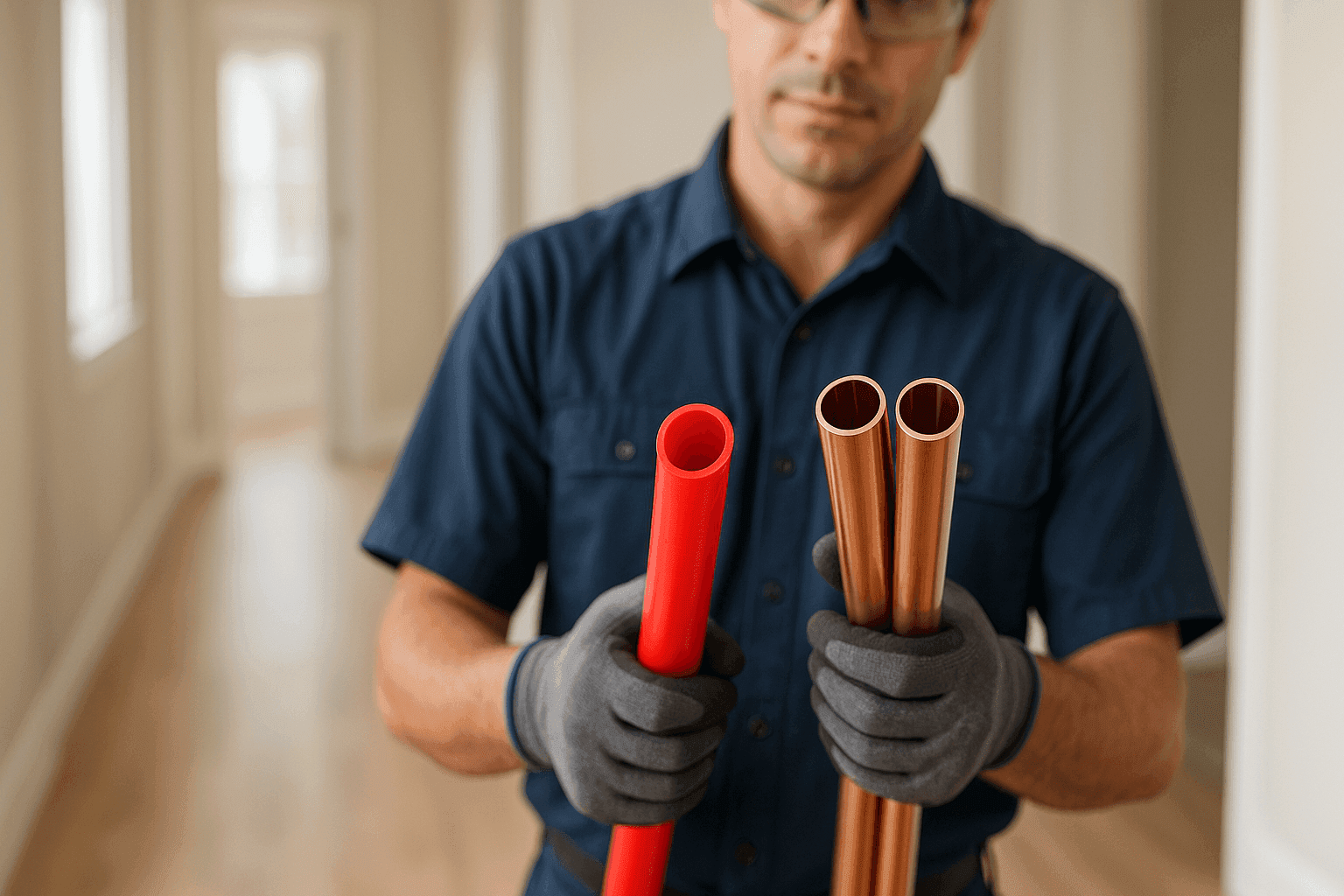
Copper
Copper pipes are like the gold standard—reliable and long-lasting. They resist corrosion, handle heat well, and last 50+ years. Downsides? They can be pricey, and acidic water can wear them down over time.
PEX (Cross-linked Polyethylene)
PEX is flexible and easy to install, making it popular for modern homes. It handles freezing temps better than rigid pipes and is resistant to scale and chlorine. Life expectancy? Around 40–50 years.
CPVC (Chlorinated Polyvinyl Chloride)
CPVC stands up to high temperatures and resists corrosion. It’s a solid choice for hot water lines but can become brittle with age or sun exposure.
Galvanized Steel & Lead
If your home is older and still has galvanized steel or, worse, lead pipes—replacement is urgent. These materials corrode quickly and can affect water quality and safety. The U.S. EPA and local codes strongly recommend replacing lead pipes.
What Happens During a Repiping Project?
Repiping is like open-heart surgery for your house. Here’s what to expect, step by step:
- Assessment: A plumber inspects your current system. We’ll look for problem areas and choose the best materials for your needs.
- Planning: We map out your home’s plumbing, deciding which walls and floors need opening. This keeps the project as tidy as possible.
- Preparation: Furniture and valuables are covered or moved. Floors are protected with drop cloths.
- Old Pipe Removal: The old pipes are cut out section by section.
- New Pipe Installation: New pipes are installed, usually in sections to keep water off for as little time as possible.
- Testing: The whole system is pressure-tested to check for leaks.
- Restoration: Walls and floors are patched up, and everything is cleaned.
Most families can stay home during the process, but there will be short periods without water.
Timeline and Cost Factors ⏳
Repiping isn’t a one-hour job. Most projects take 2–7 days, depending on:
- Home Size: Larger homes mean more piping.
- Number of Bathrooms/Kitchens: More fixtures = longer install time.
- Type of Pipe: PEX installs faster than copper.
- Accessibility: Hard-to-reach pipes (behind tile, under slabs) can slow things down.
- Permitting: Local code requirements may affect timing.
Cost depends on all the above, plus material choice. While we can’t quote without seeing your home, most projects land somewhere between a major appliance purchase and a used car. We offer financing options to help spread out the cost—just ask us.
Quick Safety Checklist Before Repiping
- Know where your main water shut-off valve is located.
- Remove valuables and small furniture from work areas.
- Secure pets in a safe room away from noise and dust.
- Ask about dust barriers to keep your home clean.
- Check with your local building department on permit requirements (if DIY).
A little prep goes a long way to keep your home (and nerves) intact.
DIY vs. Call a Pro
Repiping is not a weekend project. While a handy homeowner can fix a leaky faucet, repiping involves cutting into walls, working with pressurized lines, and meeting strict plumbing codes (see the Uniform Plumbing Code by IAPMO).
DIY risks:
- Hidden leaks that cause expensive water damage.
- Code violations that affect resale or insurance.
- Incomplete connections leading to future emergencies.
With RWB Plumbing, you get licensed plumbers who know the ins and outs of safe, code-compliant installation. When it comes to emergency plumbing, peace of mind is worth its weight in copper.
What Pros Do When They Arrive
When our team shows up, here’s what happens:
- We walk your home with you, marking work areas.
- Water supply is shut off with your approval.
- Drop cloths and plastic sheeting go down to protect surfaces.
- Old pipes are removed with care to minimize dust.
- New pipes are installed, with each section tested for leaks.
- Final walkthrough to make sure everything is perfect.
You’ll always know what’s happening, every step of the way.
Minimizing Disruption & Protecting Your Home 🛠️
No one likes a house turned upside down. Here’s how to keep chaos at bay:
- Communicate: Let your plumber know your schedule. We’ll plan water shut-offs for the least disruptive times.
- Prep Ahead: Move fragile items and clear under-sink cabinets.
- Barrier Up: Ask about dust control barriers.
- Daily Clean-Up: Crews should tidy up at the end of each day.
- Plan Meals: Have bottled water and easy meals ready. Consider showering before work begins.
A little up-front planning keeps life running smoothly—even when your pipes aren’t.
Preventative Maintenance and Pipe Lifespan
Want your new pipes to last? It’s all about maintenance:
- Schedule regular plumbing inspections, especially if you notice changes in pressure or color.
- Consider a water filtration system to reduce minerals and corrosive elements.
- Don’t ignore small leaks—they’re like weeds. Left alone, they grow.
- Drain cleaning and backflow prevention services protect your investment.
The National Association of Home Builders recommends checking pipe material lifespans and performing regular system checks.
When Repiping Is an Emergency
Sometimes, waiting isn’t an option. Emergency plumbing calls are common after:
- Major leaks or pipe bursts.
- Repeated water pressure drops.
- Sudden water discoloration in several faucets.
- Discovery of lead or severely corroded pipes.
If you’re mopping up another flood or worried about water safety, call us. We provide emergency plumbing services any time, day or night.
Repiping FAQ
How do I know if my home needs repiping or just repair?
If you’re facing frequent leaks, discolored water, or low pressure across the whole house—not just one spot—repiping is probably needed. A single leak? Repair may be enough.
Will the pipes be visible after the work?
No. Pipes are installed inside walls, floors, or ceilings. We patch up any access points and restore surfaces as close to original as possible.
How long will I be without water?
Most homeowners are without water for only a few hours each day, not the entire project. We schedule shut-offs so you have water when you need it most.
Can I finance my repiping project?
Yes. RWB Plumbing offers financing options to help you spread out the cost. Ask us for details during your estimate.
Local and Seasonal Considerations 🌦️
Climate matters. In colder areas, freezing pipes are a top concern—ask about insulation and freeze-resistant materials. In older neighborhoods, local plumbing codes may require specific pipe types or permits. Always check with your city’s building department or consult the latest guidance from the International Plumbing Code.
If you’re searching for “Water Heater Repair near you” or emergency plumbing after a winter freeze, we’re ready to help.
Ready to talk about repiping—or just have questions? Call RWB Plumbing now — or reach us anytime at 877-409-5028 .