Sewer Line Inspection: Signs You Need One and What to Expect
Have you noticed your drains moving slower than usual? Or maybe there’s a strange smell lingering around the yard. Problems with your home’s sewer line can be unnerving, and ignoring them often makes things worse. At RWB Plumbing, we know how distressing sudden plumbing issues can be—especially when they threaten your home and peace of mind.
You don’t have to be a plumbing pro to spot early warning signs. Acting quickly can help you avoid a messy, expensive emergency. Below, we’ll walk you through what to watch for, when to pick up the phone, and what really happens during a sewer line inspection.
Common Signs Your Sewer Line Needs Attention
Sewer lines are like the hidden highways of your home’s plumbing. When they’re blocked, broken, or invaded by tree roots, your whole house feels it. Here’s what to watch for:
- Slow Drains: One sink draining slowly? Could be a minor clog. Multiple fixtures? That’s a red flag for a deeper issue.
- Gurgling Sounds: If your toilet or drain burbles like a coffee pot, air is trapped somewhere it shouldn’t be.
- Soggy Spots in the Yard: Even on dry days, pools of water or bright green patches of grass can signal a leak below.
- Unpleasant Odors: A persistent sewer smell indoors or outside is your nose’s way of saying, “Something’s wrong.”
- Frequent Backups: If water or waste keeps coming back, the sewer line may be blocked or damaged.
Think of these as your plumbing’s “check engine” light. Ignoring them rarely ends well.
When Should You Schedule a Sewer Line Inspection? 🛠️
Not every drip or clog means disaster. But some situations call for a closer look—especially if you want to avoid an emergency plumbing call at 2 a.m.
1. Older Homes
Homes built before the 1980s often have clay or cast iron pipes. Over time, these materials crack, rust, or collapse. If your home is aging gracefully but its pipes aren’t, it’s time for a checkup.
2. Tree Root Intrusion
Trees love water. Their roots will seek out even the tiniest cracks in your sewer line. If you have mature trees near your sewer path—or notice roots in your drains—it’s worth getting an inspection.
3. After Heavy Rains or Storms
Big storms can shift soil and stress pipes, causing sudden breaks or misalignments. If you’ve had flooding or ground movement, schedule an inspection as a precaution.
4. Recurring Plumbing Problems
If you’re calling for drain cleaning or leak repair more than usual, the issue could be deeper than you think.
5. Before Major Renovations
Planning a new bathroom or kitchen? Inspect the sewer line before you invest in upgrades that could be affected by hidden issues.
Quick Safety Checklist Before You Investigate
Before poking around, keep these safety tips in mind:
- Never open a cleanout cap if you suspect a backup—pressurized waste can surge out.
- Watch for electrical hazards if water has pooled near outlets or appliances.
- Know your local plumbing codes (refer to the International Plumbing Code or your city’s guidelines) before attempting DIY sewer work.
- If you smell gas while checking plumbing, leave the area immediately and call for help.
- Always wear gloves and wash hands thoroughly after handling plumbing fixtures.
DIY vs. Call a Pro
A plunger or drain snake can fix minor clogs. But when symptoms point to the main sewer line, it’s a whole different story.
DIY is fine for:
- Single slow drains
- Minor hair or soap clogs
Call a professional if:
- Multiple drains are slow or backing up
- You hear gurgling from fixtures after using water
- You notice yard sogginess or unexplained odors
- Previous attempts to clear the drain haven’t worked
Your home’s sewer line is buried deep and often tangled with roots, old pipes, or shifting soil. Specialized tools—and safety know-how—are essential. RWB Plumbing’s team is always on standby for emergency plumbing calls, using advanced diagnostics to pinpoint issues quickly.
What Pros Do On Arrival: The Inspection Process
When you call RWB Plumbing for a sewer line inspection, here’s what happens:
- Initial Assessment: We’ll ask about your symptoms and check visible plumbing for clues.
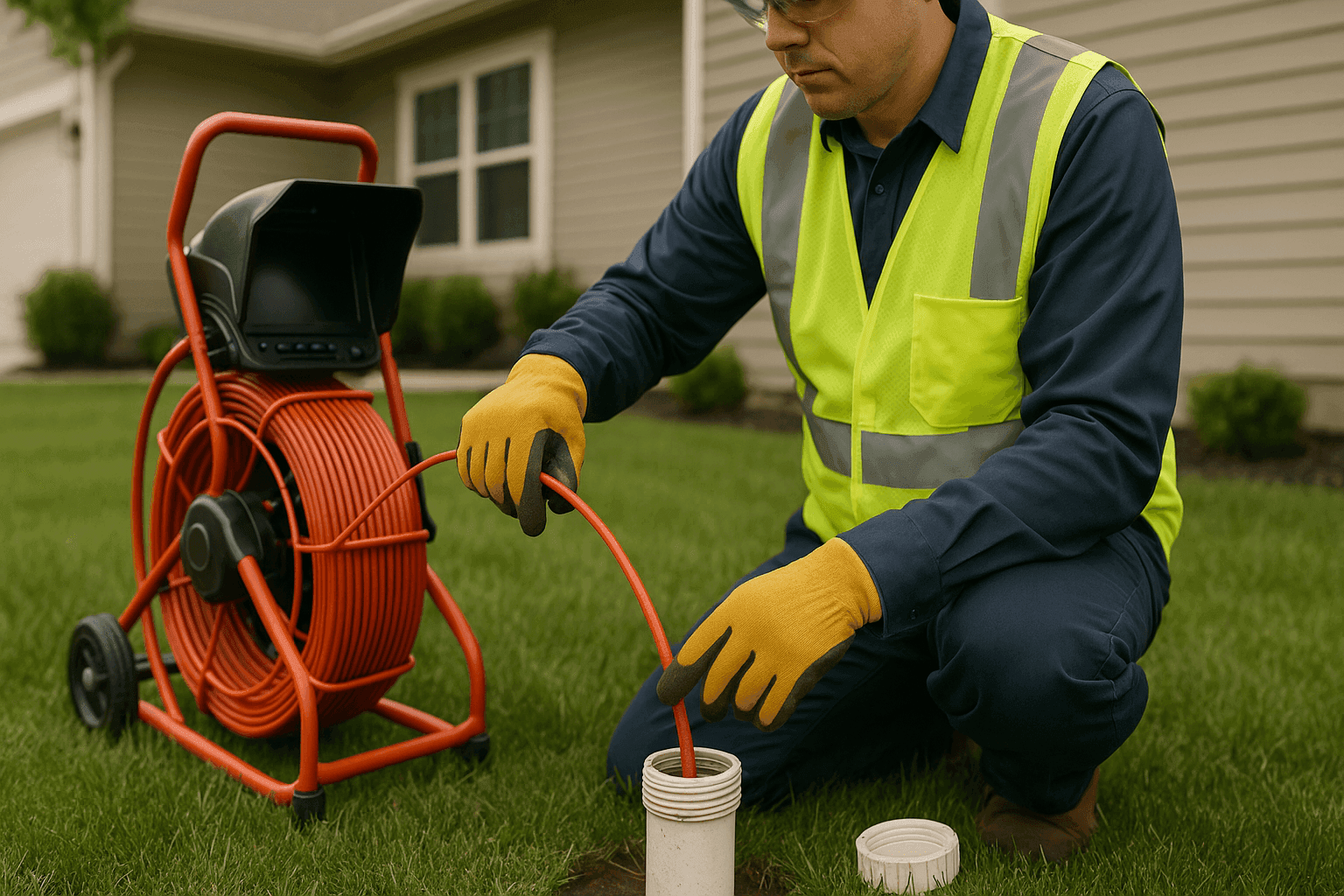
- Accessing the Line: A technician locates your main cleanout—usually outside or in the basement.
- Video Camera Inspection: Using a flexible, waterproof camera, we snake through the pipe. The live feed shows blockages, cracks, roots, or buildup.
- Diagnosis: We interpret the footage, explain the findings in plain language, and answer your questions. No jargon. No pressure.
- Clear Reporting: You receive a transparent, visual report of what’s happening below ground—including images or video clips if possible.
- Next Steps: If repairs are needed, we outline your options. Sometimes it’s a quick fix. Other times, more work is needed—like pipe repair, cleaning, or even sewer line replacement.
Think of the camera like a periscope: it lets us see the hidden world inside your pipes, so we’re not guessing.
Prevention & Maintenance: Tips for Healthy Sewer Lines
Keep your sewer line off the emergency list with a few proactive habits:
- Don’t flush wipes or hygiene products—even “flushable” ones can cause trouble.
- Limit food waste and grease in the kitchen sink. They solidify and block pipes.
- Schedule routine drain cleaning every 1–2 years, especially in older homes.
- Watch for root growth near sewer lines and address tree issues early.
- Install backflow prevention devices where required by code, especially in flood-prone areas.
Regular maintenance can save you from big headaches—and even bigger bills—down the road.
Costs & Time Factors: What to Expect
Sewer line inspections are an investment in your home’s health. Here’s what can affect cost and timing:
Inspection Process
- Video Camera Inspection: Typically takes 60–90 minutes, depending on pipe length and accessibility.
- Reporting & Consultation: Adds another 15–30 minutes. You’ll get a clear explanation and next steps.
Cost Factors
- Access Difficulty: Buried or blocked cleanouts may add time.
- Pipe Length & House Size: Larger homes or properties may take longer.
- Severity of Issue: Finding and clearing a simple clog is quicker than diagnosing collapsed pipes or root intrusions.
Most inspections are completed same-day. If repairs are needed, timelines will depend on the extent of the work.
When It’s an Emergency 🚨
Some sewer problems just can’t wait:
- Raw sewage backing up into showers or sinks
- Major water pooling in the yard or basement
- Persistent sewer gas odors indoors
- Sudden loss of water pressure throughout the house
If you suspect a sewer emergency, don’t delay. RWB Plumbing responds around the clock—our team is equipped for emergency plumbing situations, whether you’re facing a backed-up toilet, a leaking water heater, or a ruptured sewer line.
FAQ: Sewer Line Inspections
How often should I inspect my sewer line?
For most homes, every 2–3 years is reasonable—more often if you’ve had problems before, or if your property has lots of trees.
Is a video inspection safe for old pipes?
Yes. The cameras are designed to be gentle and flexible, so they won’t damage even fragile lines.
Can I use chemical drain cleaners before an inspection?
It’s best to avoid them. Chemicals can mask problems or corrode pipes, making repairs harder.
Will insurance cover sewer line repairs?
It depends on your policy and the cause of the damage. Check with your homeowner’s insurance provider for details.
Local & Seasonal Considerations
- Cold Weather: Frozen ground can stress pipes. Inspections in winter may uncover cracks caused by freeze-thaw cycles.
- Heavy Rain: After storms, watch for sudden backups—flooded soil can shift or break pipes.
- Soil Type: Some soils (like clay) expand and contract, stressing sewer lines over time.
Wherever you live, it pays to stay alert to seasonal changes and local risks. Refer to your local building codes or the Uniform Plumbing Code for region-specific requirements.
Got questions? Need an inspection before problems get worse?
Call RWB Plumbing now — or reach us anytime at 877-409-5028 .